
Mind designs culturally rooted, evidence-based SEL curricula that fit seamlessly into your school's academic structure. giving every student the emotional and social skills that determine how well everything else in their life goes.
of school-aged children and teenagers in India experience symptoms of depression, a mental health crisis already inside most school buildings.
Indian Mental Health Research, 2024
reduction in problem behaviour reported in schools with consistent SEL implementation, fewer disciplinary incidents, reduced bullying, improved classroom climate.
ResearchGate, 2024
return on investment for every rupee spent on high-quality SEL programmes, through improved academic outcomes, reduced remediation costs, and better long-term outcomes.
CASEL Return on Investment Analysis
SEL is not one curriculum delivered at one age. It is a progressive spiral the same five core competencies revisited at increasing depth and complexity as children grow. Our curricula are designed to match where students actually are developmentally, not where adults assume they should be.
Grades 1 – 4 · Ages 6–10
Foundations of Feeling
At this stage, the work is foundational naming emotions, understanding that feelings are normal, learning to ask for help, and developing the earliest skills of sharing, listening, and caring for others. The curriculum is activity-rich, story-based, and rooted in play.
Primary Focus Areas
Students build a personal vocabulary of emotions naming, drawing, and locating feelings in the body. Activities include emotion cards, feeling journals, and guided storytelling.
4 Sessions | 40 min each
Students learn 3–5 practical self-calming strategies and practice using them in simulated situations. Anchored in breath work, movement, and sensory awareness.
3 Sessions | 40 min each
Through guided stories and role play, students develop perspective-taking and early empathy. Includes class discussion and creative art activities.
4 Sessions | 40 min each
Collaborative team activities that build listening, sharing, and turn-taking skills. Includes structured group projects and reflection circles.
4 Sessions | 40 min each
Simple conflict resolution stopping, thinking, talking, solving. Students practice scripts for common peer conflicts and learn to involve adults wisely.
3 Sessions | 40 min each
Building help-seeking behaviour identifying trusted adults, practicing asking for support, and understanding that asking is a strength, not a weakness.
2 Sessions | 40 min each
Grades 5 – 8 · Ages 10–14
Navigating the Social World
The middle school years are among the most socially and emotionally turbulent. Identity formation, peer pressure, digital life, and the first real encounters with exclusion, comparison, and self-doubt make this the most critical window for SEL investment. The curriculum becomes more reflective, relational, and real-world grounded.
Primary Focus Areas
Exploring identity beyond labels values, strengths, roles, and the gap between public self and private self. Journaling, peer dialogue, and self-portrait activities.
5 Sessions | 45 min each
Students learn to trace visible behaviours back to underlying emotions and beliefs. Real-scenario analysis and the REBT model adapted for adolescent language.
4 Sessions | 45 min each
Digital wellbeing, social media and self-comparison, cyberbullying, and screen-time awareness. Practical tools for healthy digital habits and when to seek adult support.
4 Sessions | 45 min each
Understanding how peer dynamics work and developing the self-awareness and assertiveness to make authentic choices even under social pressure.
4 Sessions | 45 min each
A practical conflict resolution toolkit listening, naming the issue, finding common ground, and making agreements. Role-play based with real peer scenarios.
5 Sessions | 45 min each
Age-appropriate psychoeducation on stress and the body, paired with 4–6 practical self-regulation tools specifically applied to academic pressure.
4 Sessions | 45 min each
Grades 9 – 12 · Ages 14–18
Designing a Life Worth Living
Senior school is the last mile before adulthood. Students are navigating board pressure, career uncertainty, relationship complexity, and the existential questions of identity and purpose. The curriculum becomes deeply reflective, philosophically grounded, and practically focused on life skills that will serve them for decades.
Primary Focus Areas
Adapted from Simon Sinek students explore their personal purpose, values, and the difference between a life lived from external expectation versus internal clarity. Deep journaling and peer dialogue.
5 Sessions · 50 min each
Understanding perfectionism, performance anxiety, and the belief systems driving exam-related distress. REBT adapted for student contexts, with practical reframing tools.
5 Sessions | 50 min each
Building genuine resilience not the performance of resilience. Students examine their relationship to failure, setback, and criticism and rebuild it on a growth mindset foundation.
4 Sessions | 50 min each
The skill of communicating truthfully and caringly with parents, peers, teachers, and eventually employers. Practical frameworks for feedback, disagreement, and asking for what you need.
5 Sessions | 50 min each
Adapted from the corporate module attention management, habit design, and personal productivity systems tailored to student life, boards, and the transition to college.
4 Sessions | 50 min each
A culminating unit bringing together purpose, values, identity, and contribution. Students write a personal leadership manifesto and share it in a structured cohort conversation.
4 Sessions | 50 min each
A curriculum built for your school specifically.
We don't arrive with a finished product and ask your school to fit around it. We begin with deep listening understanding your students, your culture, your capacity, and your aspirations and build a curriculum that belongs to your school from day one.
01
Phase One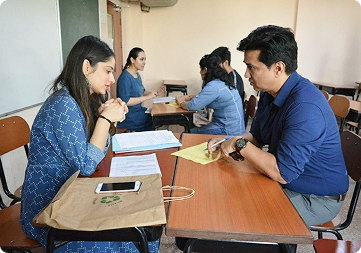
We begin with a structured needs assessment student wellbeing surveys, conversations with teachers and the counsellor, review of any existing programmes, and alignment meetings with the principal and coordinator. We map what your students are actually experiencing, not what we assume.
Key Deliverables
02
Phase Two
We design the curriculum architecture which competencies are prioritised at which age bands, how many units per grade, session frequency and length, how it integrates with your timetable, and how it connects to your school's academic and value framework. We present this as a co-design document before any content is written.
Key Deliverables
03
Phase Three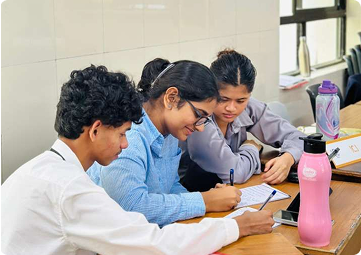
We write and design the full curriculum content session plans, facilitator guides, student worksheets, reflection tools, and assessment rubrics. All content is culturally sensitive, age-appropriate, and grounded in evidence-based SEL frameworks (CASEL). Content goes through a school review cycle before finalisation.
Key Deliverables
04
Phase Four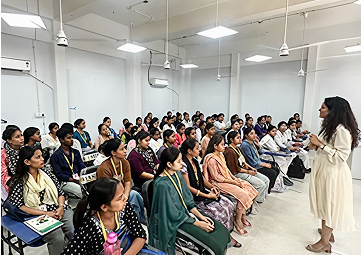
We run a structured pilot with one grade or section facilitated by Mind, observed by a designated teacher champion. Post-pilot, we gather student and teacher feedback, refine content, and adjust pacing. This cycle is built in before school-wide rollout, ensuring quality before scale.
Key Deliverables
05
Phase Five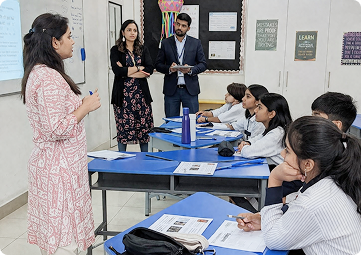
We deliver the full curriculum package to the school in a format that allows your team to deliver it independently or with continued Mind facilitation. A comprehensive handover session ensures your staff are equipped. Annual review cycles allow the curriculum to evolve as your school grows and student needs change.
Key Deliverables
A complete curriculum package ready to deliver from day one.
Everything your school needs to run a high-quality, consistent, and measurable SEL programme designed for your context, owned by your school.

Detailed Session Plans

Facilitator Guide

Student Worksheets & Materials

Assessment & Tracking Tools

Parent Communication Pack

Annual Review Framework
Other ways we support school communities.
Before we design any intervention, we conduct a rigorous organizational assessment across six dimensions going beyond surveys and workshops to understand the actual human architecture of your organization.

SEL Programme Facilitation
Mind facilitators deliver the curriculum directly to students bringing expert SEL facilitation that ensures quality, safety, and consistency until your school is ready to build internal capacity. Available as the primary delivery model or as a transition to teacher-led delivery.
Explore Facilitation
Teacher & Facilitator Training
Equip your own teachers to deliver and sustain SEL independently through comprehensive professional development, ongoing coaching, and a certification pathway for advanced SEL practitioners within your school.
Explore FacilitationReady to give your students the skills that last a lifetime?
Students, teams, or leaders
